


We are now in Myhiia – the very heart of a place where nature and history are tightly interwoven. This is where your official introduction to Buzkyi Gard National Nature Park begins.
The stone you are standing on is part of the Ukrainian Shield. The granites that formed the cliffs and boulders of the Southern Bug valley are more than two billion years old. Their unusual shapes have long inspired local names, such as the Turkish Table rock, located on the right bank near the Myhiia Hydroelectric Power Plant. Further downstream, near Gordon’s Rock, you will find stone formations known as the Elephant and the Crocodile.
The flora of Buzkyi Gard includes more than one thousand rare plant species. The fauna is equally remarkable, with dozens of animal species protected at both national and international levels. The unique combination of rocky, steppe, forest, and aquatic landscapes has allowed rare natural habitats to survive here.
These lands also hold significant historical value. In the eighteenth century, a Zaporizhian Cossack winter settlement and the outpost of Myhei already existed in Myhiia, where a Cossack sloboda was later established. The name of the village is associated with the ancient Myhiia tract along the Southern Bug River, as well as with the ancient Greek word Emigea, meaning “my land.”
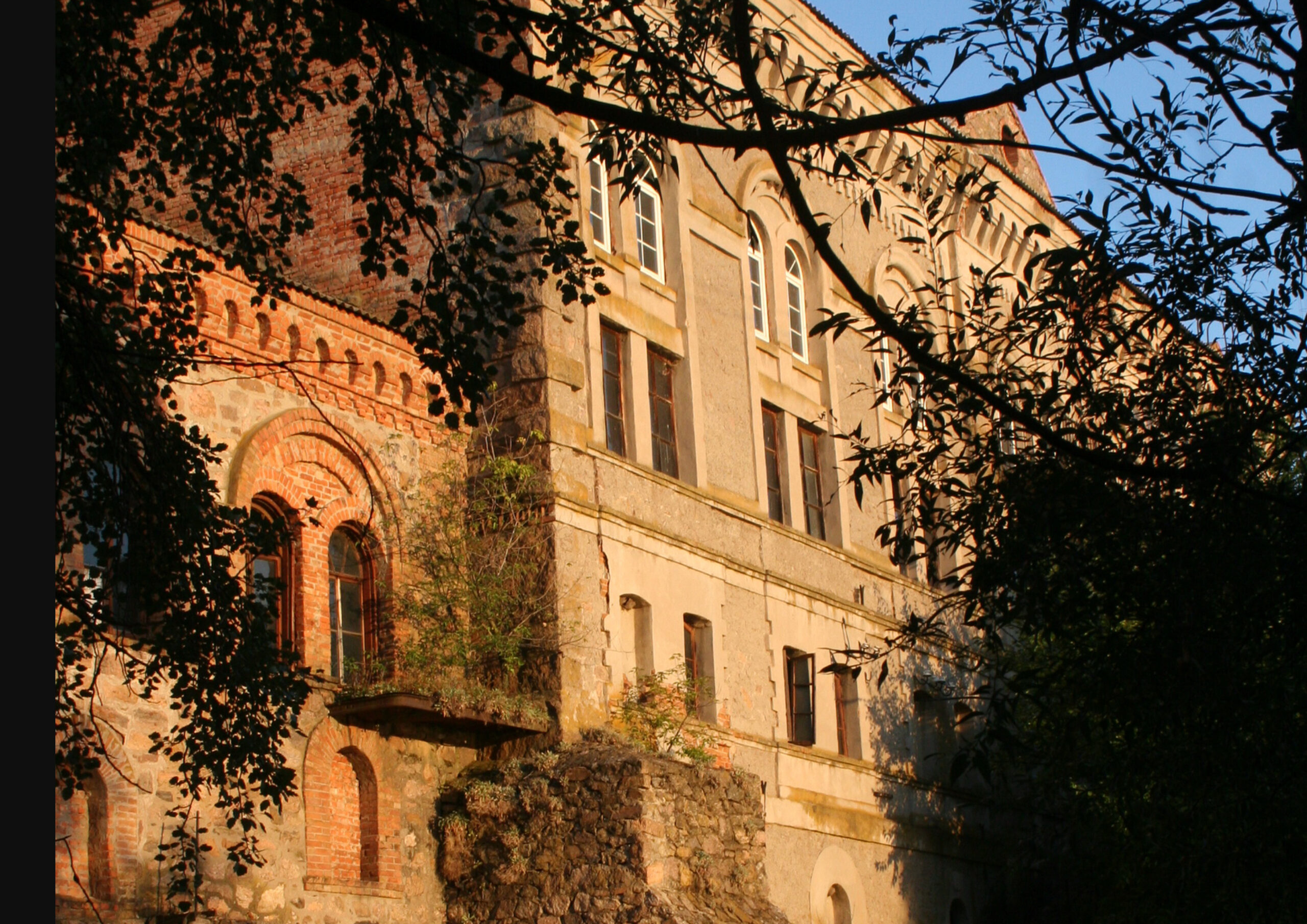
Thanks to the river’s rapid current, this location proved ideal for building water mills. Special attention should be given to the Great Skarzhynskyi Mill, which became the centerpiece of the entire complex. On May 16, 1887, Yosyp Skarzhynskyi laid the foundation stone of a new mill building. For its time, this was an exceptionally ambitious and daring project carried out by leading Ukrainian engineers, builders, and milling specialists.
The mill was constructed using local granite from the Myhiia quarries, while the bricks were produced at Skarzhynskyi’s own factory. The structure impressed visitors with its scale: a five-story main building with attics and a two-story tower. The heart of the mill was a turbine with a capacity of 225 horsepower, powering the entire mechanism and allowing the mill to process up to 48 tons of grain per day – an extraordinary achievement for the late nineteenth century.
Taking advantage of the nearby railway, Skarzhynskyi built a shop close to the mill, which soon became not only an industrial facility but also a distinctive landmark of Myhiia. In 1890, one of the first rural power plants in Europe was established here. The hydroelectric station continues to operate today and was modernized in 2020.
It is difficult to imagine the scale of human effort, determination, and engineering ambition that forever inscribed the Great Skarzhynskyi Mill into the history of Myhiia and the Southern Bug River. This place also reminds us that harmony between humans and nature is possible only through respect for the natural world – a lesson that should never be forgotten.