


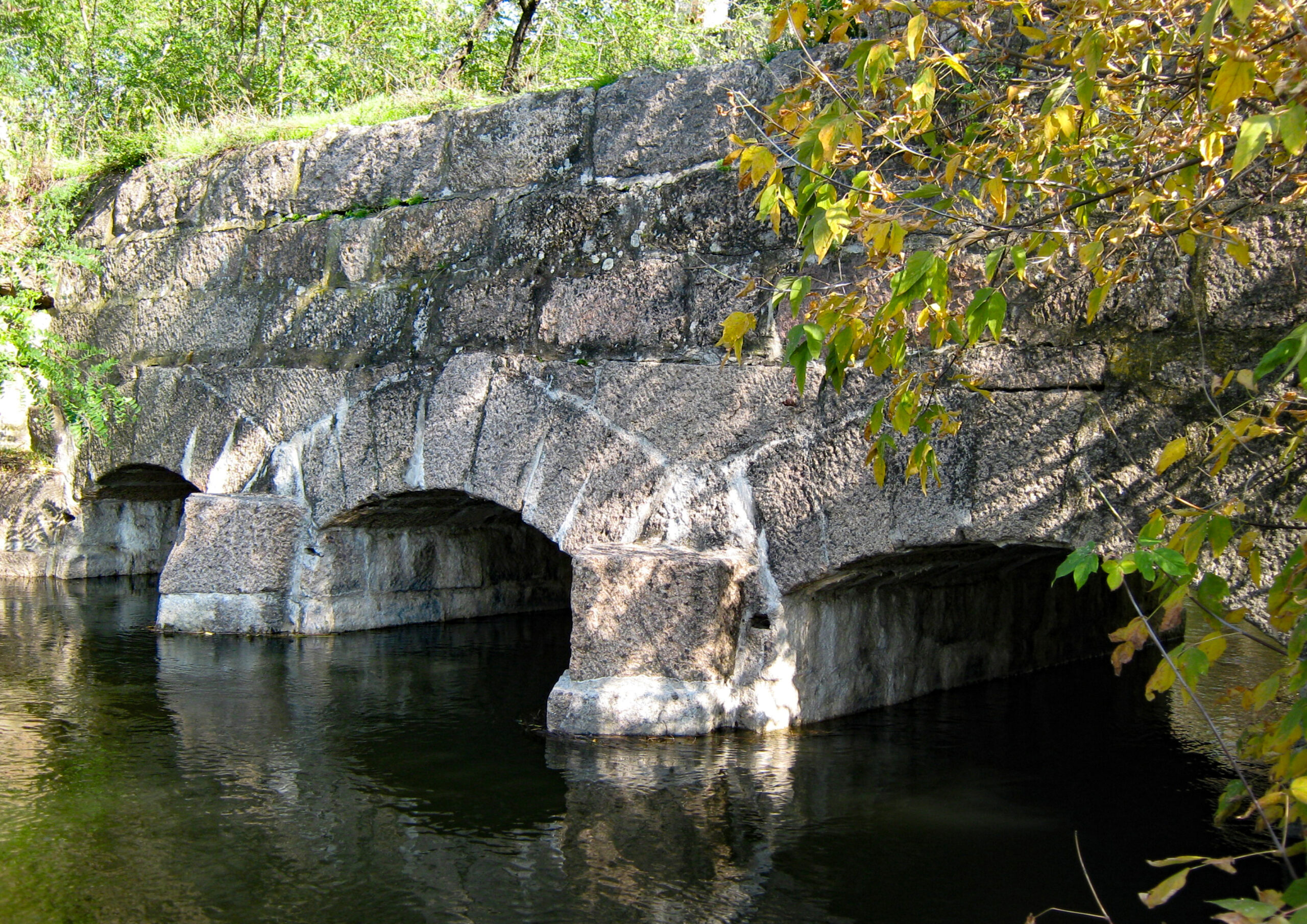
Now it is time to turn to the beginning of Myhiia’s milling history, when large structures, complex machinery, and industrial production were still in the future.
After completing his military and administrative service, Petro Skarzhynskyi devoted himself to organizing the lands and estates of Myhiia. He reshaped the landscape not through force, but through careful stewardship, laying the foundations for the area’s future economic development.
His son, Viktor Skarzhynskyi, continued his father’s work, focusing on improving and expanding this legacy. With his involvement, construction of a modernized milling system began on the site of an old Zaporizhian mill. The renewed mill was relatively small, yet it became the first link in a large milling complex that would later define Myhiia’s identity.
For its time, it was a significant engineering structure and quickly gained a strong reputation throughout the region. The high quality of the flour and the stability of the water-powered mechanism made the mill an important part of local life.
It seemed that Myhiia’s prosperity was inevitable, but the great flood of 1840 changed the course of this history. A powerful overflow completely destroyed the milling complex.
Yet the milling story of Myhiia did not end there. The disaster became a turning point and opened a new chapter. The mills were rebuilt using more advanced engineering solutions that allowed water energy to be used more efficiently. This marked the beginning of the so-called “golden age” of milling. The quality of Myhiia flour became so high that it was exported far beyond the region. Through Odesa, it was shipped to Constantinople, and Myhiia took its rightful place within international trade routes.
By the late 1980s, when the mill finally ceased operation, a fully functional water wheel still remained here for many years. Standing here today, it is easy to feel the full weight of history carried by this modest yet powerful building.
Now it is time to continue our journey. Let us walk a few hundred meters to the next two stops dedicated to Kompaniiska Rock and the river rapid located beneath it.