


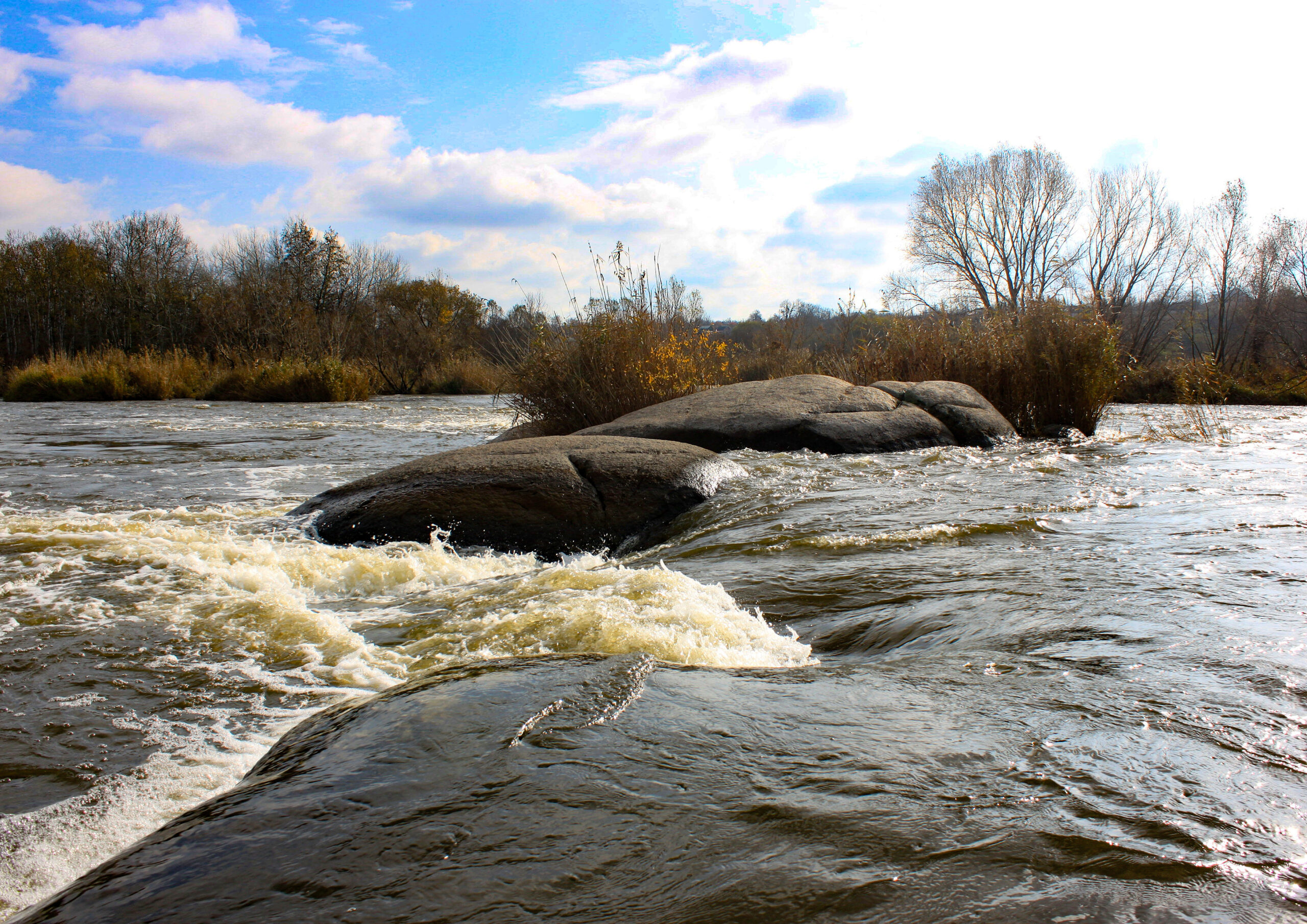
We are standing at a viewing platform where the Southern Bug reveals itself in all its grandeur. Look down at the river as it surges, roars, and breathes in its endless motion. It is in places like this that one best understands the role the water flow has played – and continues to play – in the life of this land. For people of all eras, the Southern Bug served as a route marker, a source of water, shelter, and a means of survival.
The Southern Bug has a long and eventful history. It begins near the village of Kholodets in the Khmelnytsk region. Notably, the entire basin of the Southern Bug lies within Ukraine. The river stretches for more than 800 kilometers, crossing forest-steppe and steppe zones and flowing through five regions. Throughout history, it has served Ukrainians as a transport artery, a source of water for vegetation, and a lifeline for settlements along its banks.
The Southern Bug was already known in antiquity. In the 5th century BCE, the ancient Greek historian Herodotus referred to it as Hypanis. Until the 1930s, local people often called the river Boh – a name derived from the word “God,” associated with life, abundance, and a divine giver of all that was needed. The Turkish name for the Southern Bug, Ak-Su, meaning “white water,” refers to the rapids where the river churns and foams so intensely that it appears white.
After the partitions of the Polish-Lithuanian Commonwealth, the geographical designation “Southern” was introduced to distinguish this river from the Western Bug. The lower reaches of the Southern Bug held strategic importance for the Zaporizhian Cossacks. Twenty rapids once existed along this stretch, giving rise to historic names such as Zaporizhzhia and the Zaporizhian Sich. Four of these rapids have survived opposite Myhiia, including the Kompaniiskyi Rapid, beside which we now stand.
These rapids, locally known as broiaky, create powerful, turbulent water currents. The air here is remarkably fresh, and the water has long been considered healing. For this reason, the area has become a well-known recreational zone and a popular destination for water sports and tourism.
Yet the most significant feature of this place is the historical memory it holds. Over centuries, this rapid have witnessed defining events and legends of the Cossack era. They preserve echoes of the history that shaped this region.
This is the moment to simply pause and listen. Perhaps, within the roar of the water, you may hear the voices of the past.