


We are now in the village of Trykraty. From here to the village of Aktove – a stretch of just a few kilometers – seven more interpretive stops await us. They will take us back two billion years into the geological history of the Earth, reveal the unique living world of the steppe, and unfold the story of how people and nature have coexisted here. It is time to begin.
This territory was once the ancestral estate of the Skarzhynskyi family – one of the most prominent and influential families of southern Ukraine in the eighteenth century. It was here that the identity of the village of Trykraty began to take shape. Several versions explain the origin of the village’s name: three repelled Haidamak raids, three expulsions of invaders, or three episodes of devastation. Whatever the true origin may be, each version reflects the turbulent and eventful history of this land.
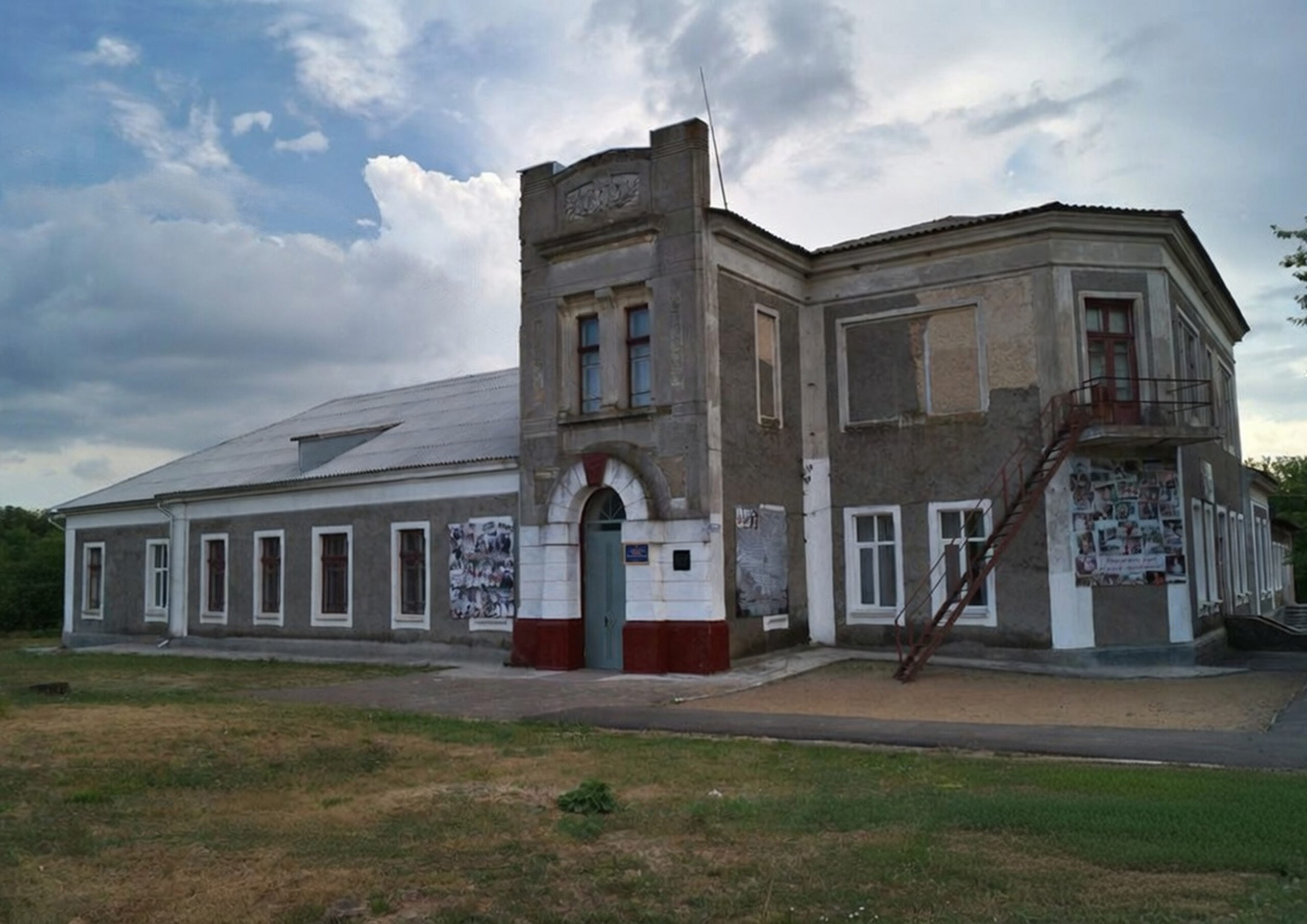
Petro Skarzhynskyi received this land from the former Zaporizhian liberties. He became the first member of the family to settle here and to begin the active economic development of the region. On the banks of the Arbuzynka River, an estate complex was built, complete with a water supply system, fountains, nurseries, and extensive cellars. Surrounded by traditional whitewashed village houses, the estate appeared almost like a palace. The estate reached its height under his son, Viktor Skarzhynskyi, who was born here in 1787. He devoted his life to agricultural innovation and scientific work, interrupting his pursuits only during the Napoleonic invasion. In Trykraty, Viktor created a unique system of steppe afforestation. He established a dendrological park, orchards, and vineyards, and oversaw the construction of dams and irrigation canals. He reformed agricultural techniques, engaged in the breeding of fine-wool sheep, raised cattle and horses, and developed beekeeping and sericulture. His work was guided by a long-term vision for the prosperity of the region.
After the turbulent 1920s, the estate suffered significant damage. Later, the building was used as a school, and during the Second World War it served as a Wehrmacht headquarters and field hospital. Today, it houses the Trykraty School of Arts. The family coat of arms – depicting a boar and a horse, symbols of courage and labor – can still be seen on the façade.
And now it is time to continue to the next stop, where we will visit a forest tract unique for the steppe – the Labyrinth.