


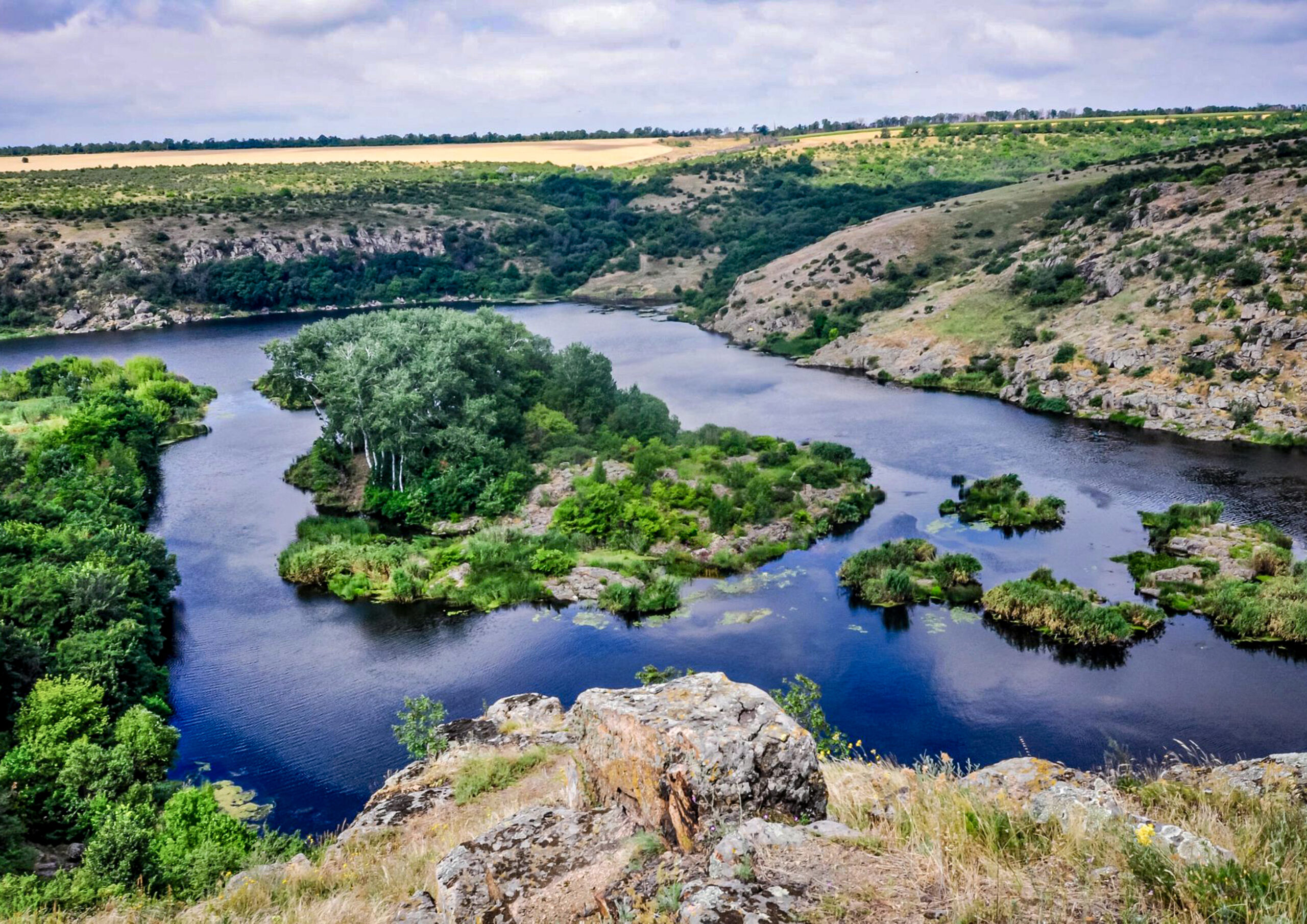
It is time to explore one of the most fascinating aspects of life in the Zaporizhian Gard – fishing. These fishing structures, known as gards, gave this place its name. The term “Gard” as a geographical toponym appears in archival documents and maps dating back at least to the early eighteenth century. For the Zaporizhian Cossacks, fishing was an essential part of both their economy and everyday life.
A fishing gard was a special type of weir placed between the riverbank and an island, or between two neighboring islands. The structure consisted of wooden beams, sturdy stakes, and woven nets. These elements were arranged so that the current would guide fish directly into the trap. The Cossacks had a deep understanding of fish behavior, seasonal migrations, and the dynamics of the Southern Bug’s current, and the sites for the gards were therefore selected with great precision.
The catches were truly impressive. Within just a few hours, it was possible to load five or even six carts with large fish. Among the most valued species were the vimba bream and the Black Sea roach, both of which were abundant in the Bug at that time. Fish was not only a staple of the Cossack diet but also an important commodity: it was dried, salted, and transported to other regions.
Fishing at the gards was well organized. It operated under the supervision of the palanka administration, and the right to use a gard was often leased. This tradition continued even after the dissolution of the Zaporizhian Sich. In the nineteenth and early twentieth centuries, local residents still maintained these structures.
The last gard in this area was installed in 1945. The life of the river had already begun to change with the construction of the Oleksandrivska Hydroelectric Power Plant in 1927. The building of the dam disrupted the natural rhythm of the Southern Bug: the swift current over the rapids weakened, water levels shifted, and the river lost continuity between its sections. This obstructed seasonal fish migrations and deprived many species of their traditional spawning grounds. As a result, both fish populations and species diversity declined sharply. With the construction of dams, the river also lost its direct connection to the sea. Sturgeon could no longer reach their historical spawning areas, and the flooding of the rapids led to the silting of the gard, rocky riverbed required for egg development. Today, all sturgeon species in Ukraine are listed as endangered and included in the Red Data Book of Ukraine.
Even now, remnants of a gard can still be seen among the stones of the Southern Bug. The memories of local residents help us imagine how this unique fishing system once functioned – an example of a way of life shaped in close dialogue with the river.